Data centers are the backbone of modern digital infrastructure, requiring unrelenting uptime and efficiency. While power and cooling systems are often the primary focus, the precision of the sensors checking or monitoring these systems is equally vital.
In the high-density environment of a modern data center, thermal management is a constant balancing act. Operators must maintain conditions that prevent equipment failure while minimizing ever more costly energy consumption. The margin for error is slim. Inaccurate environmental data can lead to two extremes:
While temperature, humidity and particulate are standard metrics, advanced Indoor Air Quality (IAQ) testing and monitoring is highly beneficial for maximizing air quality in data centers. GrayWolf Environmental Meters provide highly reliable particle and gas measurements, as well as %RH and °C/°F, in portable and continuous monitoring configurations. These instruments can also be used to verify if lower cost fixed sensors, interfaced to Building Management Systems (BMS), report accurate values to the control systems.
Particulate Matter (PM): Dust and fine particles can clog server fans and heat sinks, acting as insulators that trap heat. They can accumulate on circuit boards causing interference and short circuiting. Detecting spikes in PM allows for early detection of filter bypass or other contamination issues, as well as scheduling timely filter changes before cooling efficiency drops.
Particulate Guidelines: While ASHRAE does not specify a microgram per cubic meter (µg/m³) particle limit for every scenario, they recommend adhering to the following U.S. EPA-based thresholds to avoid equipment corrosion and failure:
However, data centers are usually recommended to, at minimum, meet ISO-14644-1 Class 8 cleanliness standards, which can be verified using GrayWolf’s range of Particle Meters.
A substantial portion of the energy use in data centers, perhaps as much as half, is dedicated to cooling the computer equipment. The data-center cooling load can be reduced by a substantial fraction when large amounts of outside air are used to cool internal loads during favorable weather conditions. However, many owners and operators are reluctant to use this cooling technique owing to concerns about the risk of equipment failure posed by introducing outdoor particulate matter into data-center buildings*.
*Particle Concentrations in Data Centers, UC Berkeley, Lawrence Berkeley National Laboratory, et al., Elsevier 2008
Gaseous Contaminants: When outdoor air quality is poor, especially in industrial areas, corrosive gases such as sulfur dioxide, nitrogen oxides (i.e. NO, NO₂), ammonia, chlorine, hydrogen sulfide, or others can enter the facility. Monitoring these pollutants helps prevent the degradation of copper and silver interconnects within servers.
American National Standard ANSI/ISA-71.04-2013 Environmental Conditions for Process Measurement and Control Systems; Airborne Contaminants lists the following gases of concern affecting electronic equipment, including process measurement and control systems, data communications and IT hardware, and other electronics.
<10
<100
<300
≥300
Cl2
<1
<2
<10
≥10
<50
<125
<1,250
≥1,250
HF
<1
<2
<10
≥10
<500
<10,000
<25,000
≥25,000
<2
<25
<100
≥100
While mild/moderate ISA concentration levels are not achievable for all sensors (sampling and lab analysis might be required to detect some of the lowest levels), many GrayWolf supplied sensors do achieve those low concentration limits, and the ones that don’t, can be used to screen for presence of those gas contaminants.
Humidity Control: Relative humidity (%RH) must be maintained within a tight range to avoid two distinct threats:
Humidity Guidelines: ASHRAE TC 9.9 Data Center Equipment Thermal Guidelines and Best Practices (2016) recommends 40% RH to 60% RH, -9°C to 15°C Dew Point. Note that these values assume standard atmospheric pressure (sea level). In special circumstances ASHRAE allows a wider %RH range.
Using Barometric Pressure (BP) Compensated Humidity Ratio
ASHRAE TC 9.9 suggests that the barometric pressure influence of altitude up to 3050 m (10,000 ft) on moisture levels can be overlooked. But for optimum accuracy, BP can be corrected for.
Humidity ratio (also called mixing ratio or moisture content) is the mass of water vapor present in moist air divided by the mass of dry air in that same sample.
By using the GrayWolf AdvancedSense® XM meter or WolfPack® XM monitor, which incorporates a barometric pressure sensor and can be equipped with a temperature and humidity sensor, you can calculate the maximum Humidity Ratio for the safe operation of servers in a data center. When calculating Humidity Ratio with an AdvancedSense/WolfPack XM, the measured barometric pressure is used in the calculation, so no conversion is necessary at different altitudes.
Differential Pressure (ΔP):
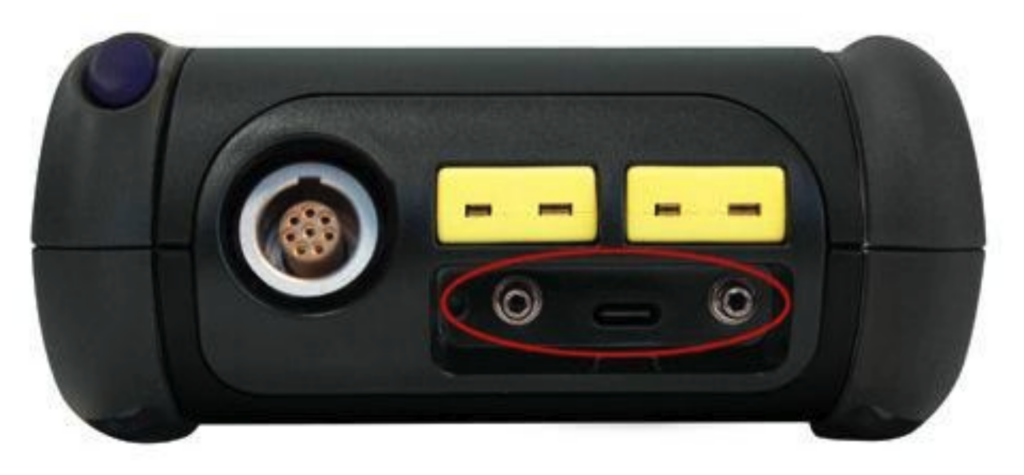
An accurate portable digital manometer can be highly useful for testing filter pressure drops to determine if the filter is due for replacement. However, when a contamination event occurs, they can be invaluable to help locate pressure breaches.
GrayWolf meters offer a dual auto-ranging sensor design with auto-zeroing for exceptional low-end ΔP accuracy (±0.1 Pa ±1% rdg), yet a wide range (±10K Pa). Choose from the Zephyr™ XM (with ΔP built-in as standard) or the AdvancedSense XM (with ΔP optional). Both meters also interface to optional thermal anemometers and/or pitot tubes for highly accurate air velocity measurement over a wide range.
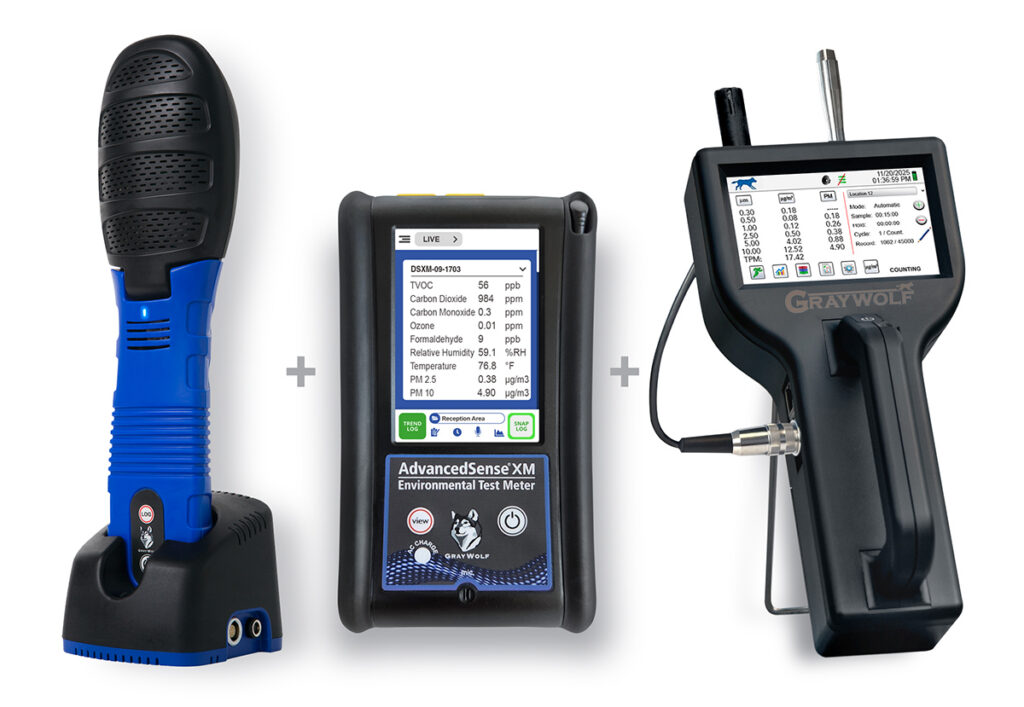
Using the AdvancedSense XM meter, a DirectSense® XM probe equipped with temperature and humidity sensors, optional NO, NO₂ and SO₂ sensors, plus a GrayWolf PC3500 Particulate Meter, you can measure key parameters needed to maintain optimum conditions in a data center. Additional sensors (e.g., NH₃, H₂S, Cl₂, O₃, HF, TVOCs) can be added for unusual environments. The purpose-built AdvancedSense XM can be substituted with a Windows, Android, or iOS device in some circumstances.
GrayWolf probes and particulate meters are versatile tools designed for both handheld spot checks and semi-permanent monitoring. Additionally, they can upload data directly to the GrayWolfLive® cloud application, sending SMS or email alerts whenever non-optimal conditions are detected.
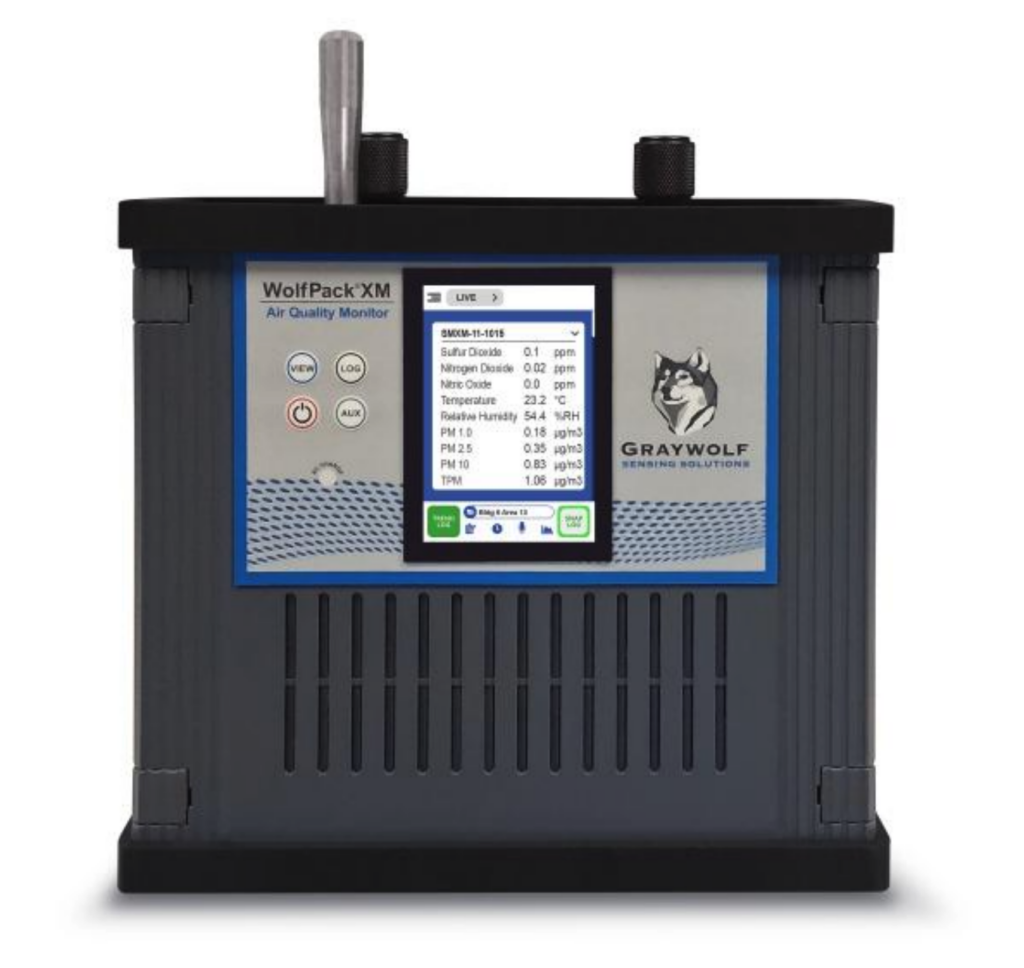
Alternatively, the new WolfPack XM monitor combines GrayWolf’s range of measurements into a single unit.
Investing in professional-grade, high-accuracy sensors offers a tangible return on investment (ROI):