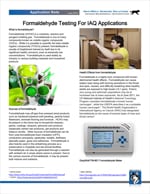
Formaldehyde (HCHO) is a colorless, reactive and pungent smelling gas. Formaldehyde is one of many compounds known as volatile organic compounds (VOCs). While it is possible to quantify the total volatile organic compounds (TVOCs) present, formaldehyde is usually of heightened interest by itself due to its significant health concerns, even at extremely low concentrations. Formaldehyde is used widely by industry in various building materials and household products.
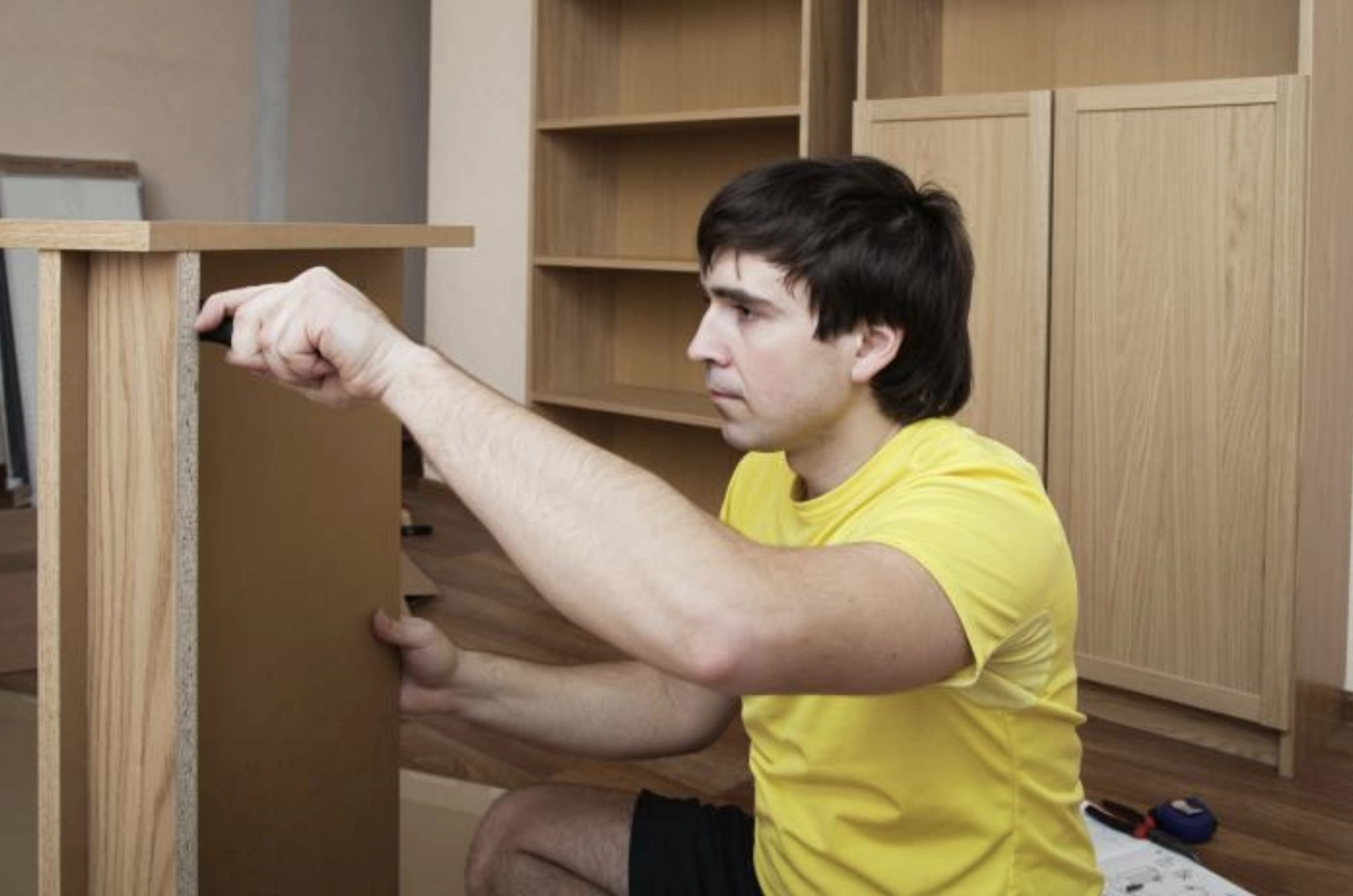
Formaldehyde may off-gas from pressed wood products such as hardwood plywood wall paneling, particle board, fiberboard, laminate flooring and furniture. HCHO may be present in the home due to household cleaners, paints, coatings, lacquers, personal care products (especially certain hair products), pet products and tobacco smoke. Other sources of formaldehyde can be from urea-formaldehyde foam insulation (UFFI), combustion processes, pesticides, textiles, fertilizers, specialty paper, glues and adhesives. Formaldehyde is also heavily used in the embalming process as a preservative in hospitals and lab animal facilities. Formaldehyde can also be generated through a reaction with ambient air in areas where ozone is present. Due to the various sources of formaldehyde, it may be present both indoors and outdoors.
Emission rates of materials that contain formaldehyde decrease with time. However, as temperature and/or relative humidity increase, so will the emission rate. When temperature and/or relative humidity decrease, the formaldehyde emission levels will typically decrease.
The ideal solution to reducing existing formaldehyde levels is to remove any formaldehyde-emitting products from the area. This will greatly reduce the levels of formaldehyde and prevent other materials from absorbing formaldehyde and then re-emitting it. Increasing ventilation rates with fresh air will typically also reduce formaldehyde levels. Surfaces that are treated with formaldehyde (and have not already been coated or laminated) can be sealed by a material that does not contain formaldehyde. When choosing furnishing and building materials, make sure to check whether they contain formaldehyde. Choosing composites with Ultra Low Emission Formaldehyde (ULEF) will help reduce the levels.
60 Minutes story about high formaldehyde levels found in Chinese-made flooring supplied by Lumber
Liquidators: http://www.cbsnews.com/news/lumberliquidators-linked-to-health-and-safety-violations/
Huffington Post on FEMA trailers containing high levels of formaldehyde after Hurricane Katrina:
http://www.huffingtonpost.com/2012/05/29/fema-trailerslawsuit-settlement_n_1551467.html
NBC story that electronic cigarettes lead to high emissions of formaldehyde:
http://www.nbcnews.com/health/cancer/you-vape-highlevels-formaldehyde-hidden-e-cigs-n290826
ABC News story discussing formaldehyde in hair straightening products:
https://abcnews.com/US/brazilian-blowout-identify-formaldehyde-hair-smoothing-products/story?id=15821056
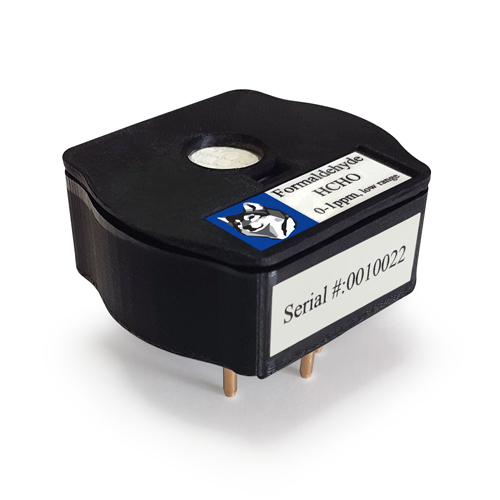
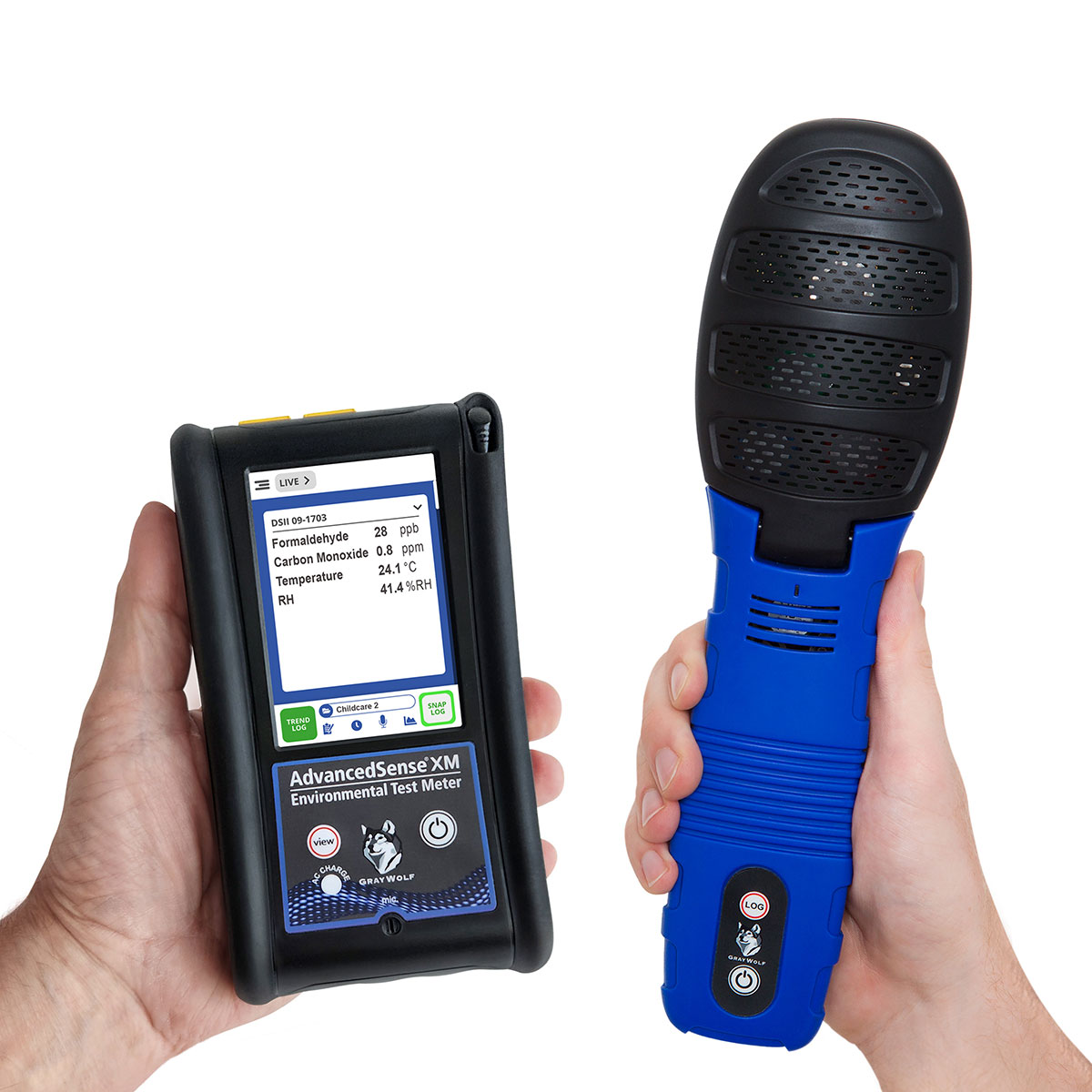
DirectSense II Kits equipped with the SEN-SMT-HCHO-L sensor, along with all GrayWolf units for a wide variety of parameters, are available for rental as well as purchase. Logged data may be downloaded to GrayWolf’s WolfSense PC data transfer and reporting software. The DirectSense II Probes may also be interfaced to other GrayWolf equipment for simultaneous display, logging, and remote online access of multiple parameters.
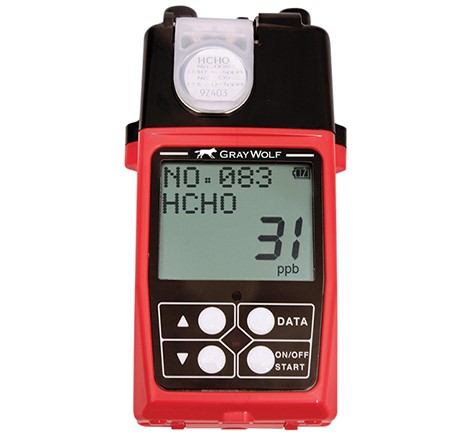
Alternatively, the FP-31G formaldehyde meter, for portable 15- or 30-minute test results, has a range from 10 ppb (parts per billion) to 1000 ppb, with actual limits of detection down to <5 ppb (below the display value). Display your readings in ppm HCHO. These very low levels of detection are essential for Indoor Air Quality (IAQ) measurement of formaldehyde and are typically not achieved by alternative continuous measurement technology.