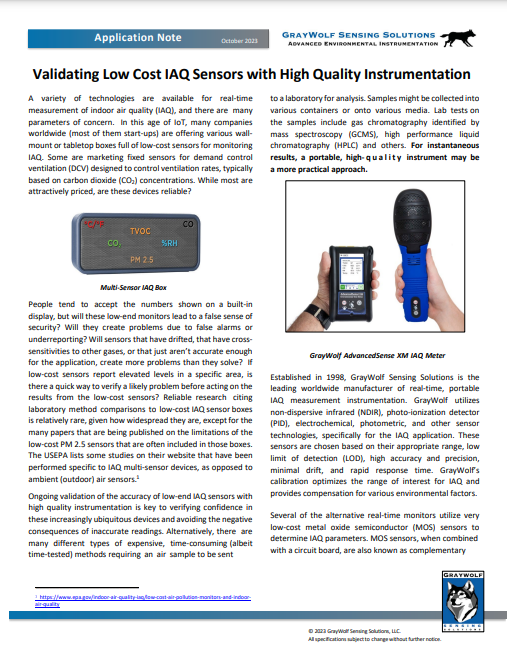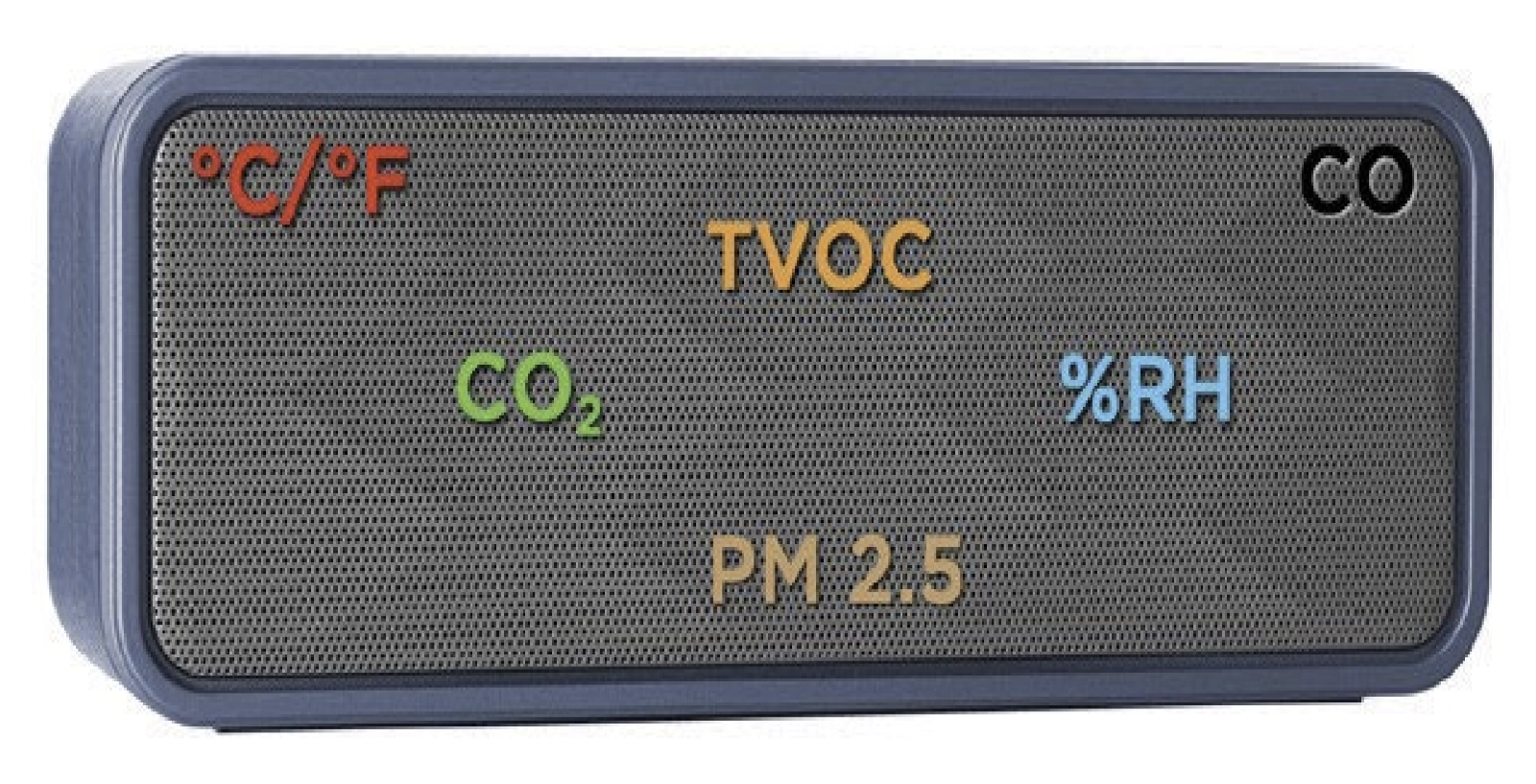
Ongoing validation of the accuracy of low-end IAQ sensors with high quality instrumentation is key to verifying confidence in these increasingly ubiquitous devices and avoiding the negative consequences of inaccurate readings. Alternatively, there are many different types of expensive, time-consuming (albeit time-tested) methods requiring an air sample to be sent to a laboratory for analysis. Samples might be collected into various containers or onto various media. Lab tests on the samples include gas chromatography identified by mass spectroscopy (GCMS), high performance liquid chromatography (HPLC) and others. For instantaneous results, a portable, high-quality instrument may be a more practical approach.
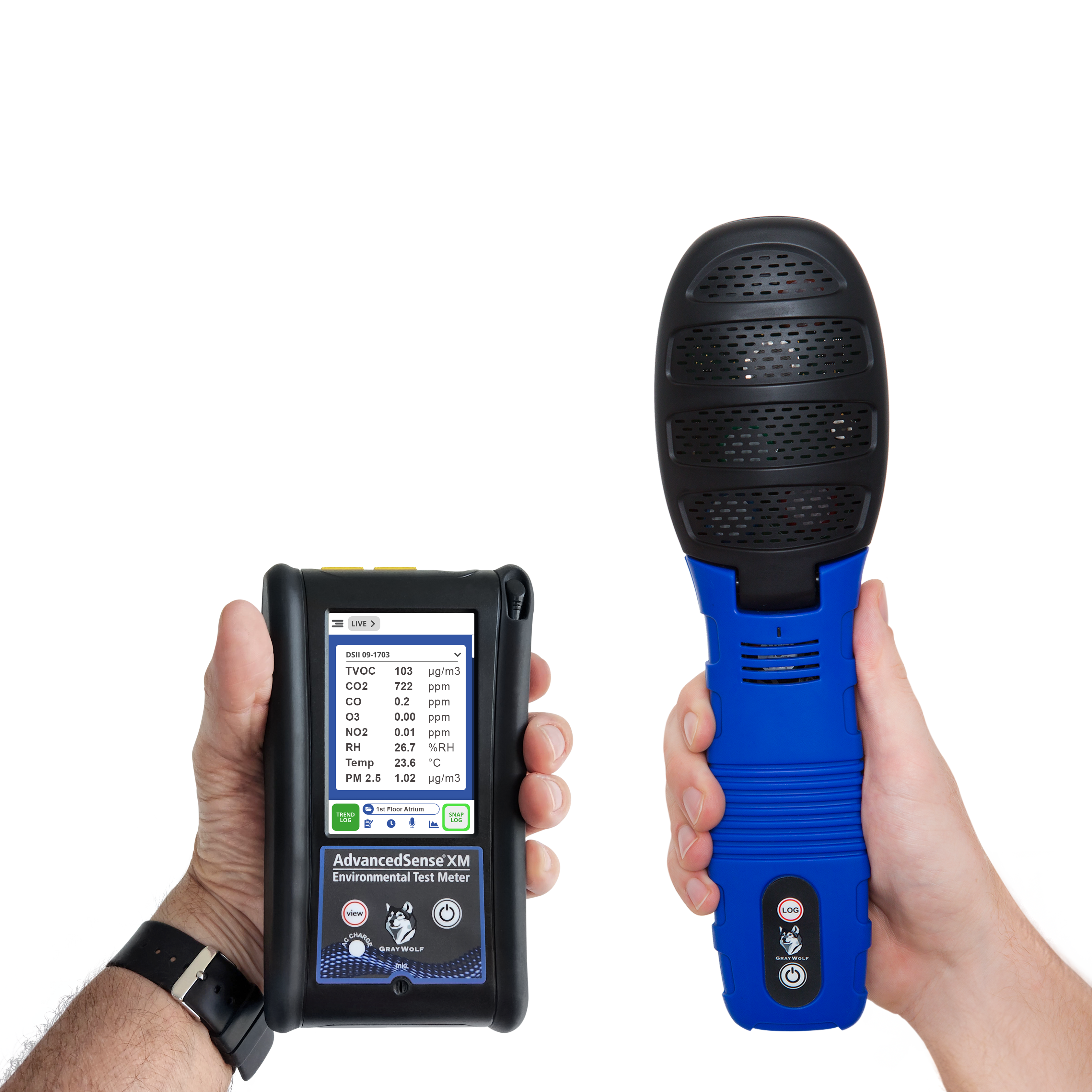
Established in 1998, GrayWolf Sensing Solutions is the leading worldwide manufacturer of real-time, portable IAQ measurement instrumentation. GrayWolf utilizes non-dispersive infrared (NDIR), photo-ionization detector (PID), electrochemical, photometric, and other sensor technologies, specifically for the IAQ application. These sensors are chosen based on their appropriate range, low limit of detection (LOD), high accuracy and precision, minimal drift, and rapid response time. GrayWolf’s calibration optimizes the range of interest for IAQ and provides compensation for various environmental factors.
Several of the alternative real-time monitors utilize very low-cost metal oxide semiconductor (MOS) sensors to determine IAQ parameters. MOS sensors, when combined with a circuit board, are also known as complementary MOS (CMOS) sensors and can be utilized to create microelectrochemical systems (MEMS) designed to report on the physical properties of the environment they are placed in. CMOS sensors are a very low-cost solution for monitoring various gases due to their simple nature of operation. In the presence of the target compound, which is a reducing gas, the density of the absorbed O2 decreases. Current then flows through the sensor as electrons are released in the MOS material. The resulting current can then be converted into a known concentration. CMOS sensors are considered to be robust, lightweight and long lasting2.
For general IAQ, some manufacturers employ CMOS sensors for monitoring total volatile organic compounds (TVOCs), carbon monoxide (CO), and in some cases to derive carbon dioxide (CO2) concentrations. CMOS sensors are not overly specific to gases and also react to many non-target gases. This leads to many false positive readings, and in some cases underreporting. CMOS sensors are sensitive to relative humidity, which can impact performance. Also, as the sensor element is heated, the resistance of the sensing layer is affected by ambient temperature changes. This leads to a change in the sensor response in air and in measurements of the target gas.
GrayWolf offers IAQ-range specific electrochemical sensors for monitoring carbon monoxide (CO), ozone (O3), nitrogen dioxide (NO2) and many other specific gases of concern for IAQ. Electrochemical sensors measure the concentration of a target gas by oxidizing or reducing the gas at an electrode and then measuring the resulting current, which is linearly proportional to the fractional volume of the target gas. This type of sensor is much more specific than a CMOS sensor.
Non-Dispersive Infrared (NDIR) is the IAQ industry standard technology for Carbon Dioxide (CO2). GrayWolf utilizes a dual-wave, rapid response NDIR sensor for CO2 (with a 4-point factory calibration optimized for the IAQ range). It has industry leading accuracy for a portable instrument. The NDIR sensor works by having an infrared (IR) lamp directed towards a detector. The detector has a filter on it that only allows certain wavelengths to pass through it that correspond to the desired gas. The amount of IR light that penetrates the filter is inversely proportional to the concentration of CO2. Dual-wave NDIR sensors offer high accuracy with very little cross-sensitivity and exhibit minimal drift over time. This makes GrayWolf’s NDIR sensors extremely applicable for validating fixed CO2 sensors, including those with less targeted calibration, single wave or non-compensated NDIR sensors, and devices that are merely deriving CO2 from a CMOS sensor.
For the broader “soup” of TVOCs, GrayWolf utilizes a low range 10.6eV PID for IAQ with detection <2 parts per billion (ppb) and resolution of 1ppb. The PID sensor is comprised of a filter membrane, an ultra-violet (UV) lamp and a detector electrode. Gas passes through the filter membrane to exclude particles and liquids and is exposed to high energy ultra-violet (UV) radiation which ionizes a proportion of the molecules present. Some of the molecules are converted into either positively or negatively charged ions. These ions are measured by a collection electrode and converted into a current corresponding to the concentration. The PID will not detect common gases such as methane (CH4), NO2, or CO, however most CMOS sensors for VOCs are cross-sensitive to CH4 and CO. With high (~1.84ppm and variable) CH4 background levels 3 and typical CO levels in homes without gas stoves of 0.5 to 5 ppm and levels near properly adjusted gas stoves often 5 to 15 ppm4, this can have a significant impact on VOC results from CMOS sensors.
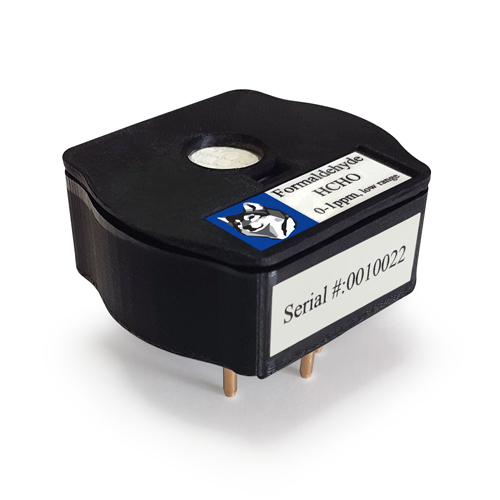
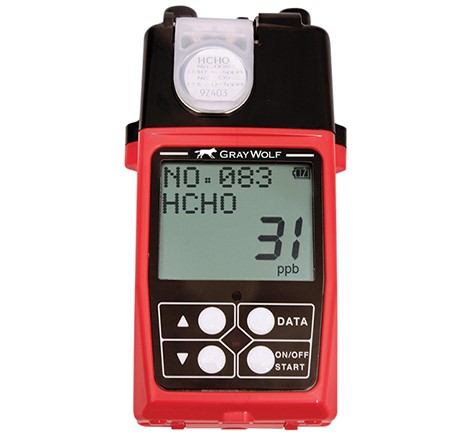
GrayWolf recently introduced a smart electrochemical sensor, for use in DirectSense II probes. The SEN-SMT-HCHOL sensor is ideal for the low (0 to 1000ppb) IAQ range, with an excellent L.O.D. (<10ppb). Unlike most EC HCHO sensors, this sensor exhibits negligible CO cross-sensitivity <10ppm CO (GrayWolf meters alert when >10ppm CO might influence readings whenever a CO sensor is also installed in the DSII probe). 20%–90%RH operating range (some moisture is critical to achieve low-range HCHO performance).
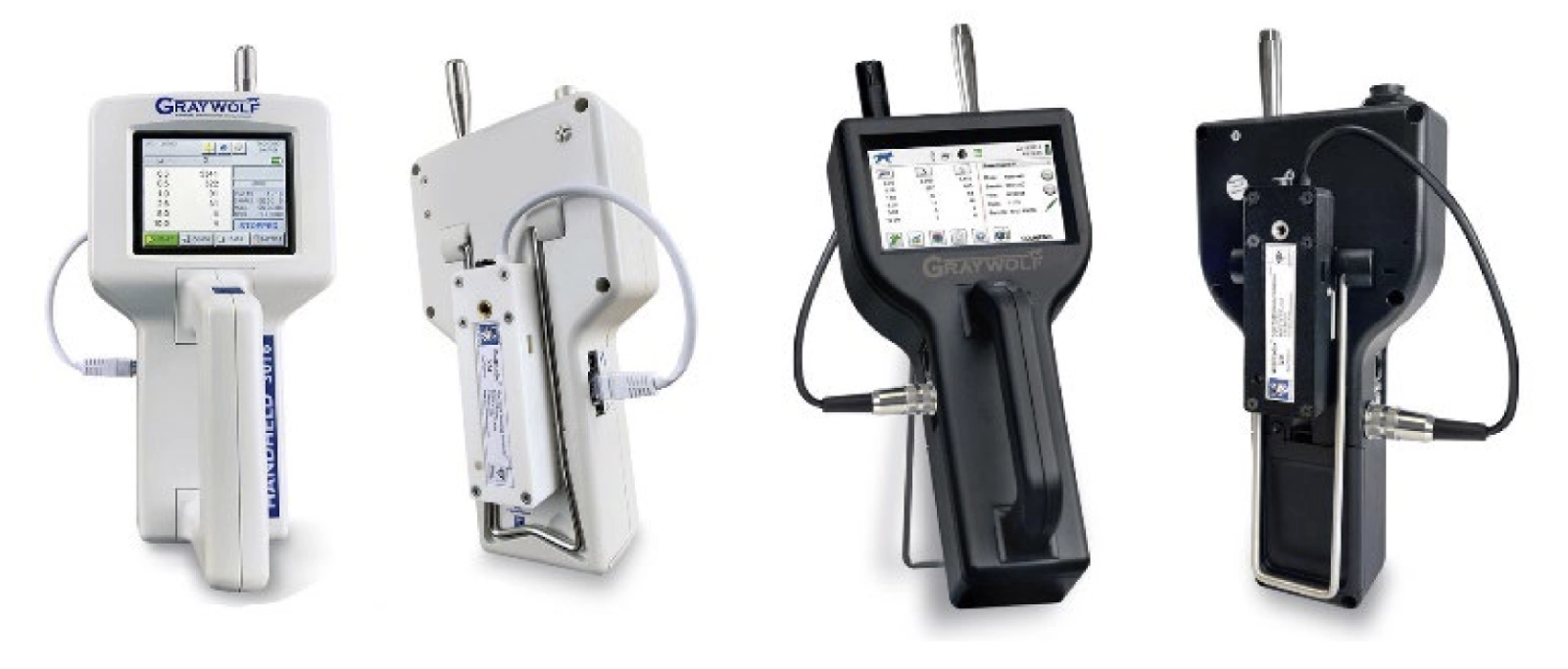
An alternative, lower cost technique for measuring particulate utilizes an LED, instead of a laser. Based on the angle and flow rate the PM values can be calculated (but to save cost, air pumps are rarely included, which greatly reduces accuracy). These devices will typically only measure PM2.5 and often will have a LOD of 0.5µ or larger, missing the very important 0.3μ to 0.5μ range. Many detect only >0.7μ, which is truly unacceptable for IAQ applications. Those that do display PM10 have generally been demonstrated to underreport that concentration which includes larger particles.
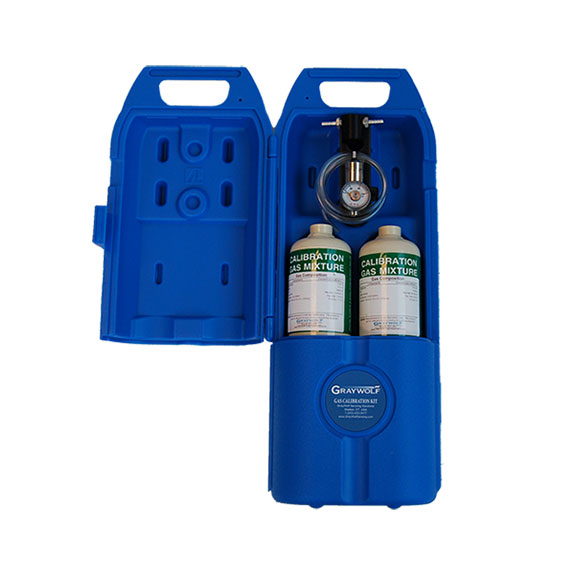
The GrayWolf equipment has the ability to be verified and, if appropriate, adjusted by the end user with traceable reference gases at any time. This allows for even more confidence in any subsequent testing of the GrayWolf meters against other devices. Any user calibration adjustments are recorded for inclusion in reporting.
Parameter
Range
Accuracy
0‐10,000 ppm
(calibration
optimized for 350‐
2000ppm)
± 35ppm over IAQ range
(350-2000 ppm)
± 3%rdg ± 35ppm>
2000ppm
0‐500.0 ppm
(calibration
optimized for 0‐
100ppm)
0‐40,000ppb
(calibration
optimized for 0‐
10,000ppb)
0-1000ppb,
0-1ppb/digit
(30-minute test):
0 -400ppb, 5ppb/digit
(15-minute test):
0-1000ppb,
10ppb/digit
± 20% Rdg or ± 5% FS
(whichever is greater)
± 2%RH <80%RH
(± 3%RH >80%RH)